Best Korean Sunscreen 2026: SPF That Finally Feels Like Skincare
Updated August 2026 · 8 min read
I skipped sunscreen for most of my twenties. Not because I didn't know better. Because every SPF I tried left a white cast, felt like latex, and ruined whatever I'd put on underneath. I'd apply it once, hate my face for the rest of the day, and give up for another six months.
Korean sunscreen fixed that. The first time I tried a proper K-beauty SPF it felt like a serum. No white cast. No grease. Absorbed in thirty seconds and disappeared completely. I wear SPF every single morning now, and I haven't thought twice about it since.
⚡ Quick Summary
- Best overall: Skin1004 Hyalu-Cica Water-Fit Sun Serum SPF50+ PA++++ ($15.99) - lightweight, works under makeup, no cast
- Best for dry skin: Look for hybrid formulas with hyaluronic acid or ceramides
- Best for oily skin: Chemical sunscreens with a watery or gel texture (like the Skin1004)
- What PA++++ means: The highest UVA protection rating available anywhere
- How much to apply: 1/4 teaspoon for face and neck - most people use way too little
Why Korean Sunscreen Is Different
The difference isn't marketing. It's regulatory. Korean sunscreen is approved under a cosmetic framework, not a drug framework like US sunscreen. That means Korean brands can use UV filters that have been available in Asia and Europe for decades but are still awaiting FDA approval in the US. The result: formulas that work just as well (often better) with textures that feel nothing like what you're used to.
Korean culture also treats SPF as a skincare step, not an afterthought. That cultural priority shows in product development. You get sunscreens with hyaluronic acid, centella, niacinamide, snail filtrate. Products that do two jobs at once without compromising on either.
Understanding the PA Rating System
SPF tells you about UVB protection (the burning rays). The PA system tells you about UVA protection (the aging rays, the ones that cause dark spots and long-term skin damage). Every Korean sunscreen lists both.
| PA Rating | UVA Protection | Good For | Visual |
|---|---|---|---|
| PA+ | Some protection | Indoor use only | ☺ |
| PA++ | Moderate protection | Daily cloudy days | ☺☺ |
| PA+++ | High protection | Daily sun exposure | ☺☺☺ |
| PA++++ | Highest available | Everyday + outdoors | ☺☺☺☺ |
PA++++ is the highest UVA rating in the Korean/Japanese system. Aim for this for daily use.
The takeaway: you want SPF50+ and PA++++ together. SPF50+ blocks roughly 98% of UVB. PA++++ gives you maximum UVA coverage. Anything less is a compromise you don't need to make, especially when good Korean options cost $16.
Chemical vs. Physical vs. Hybrid: Which Type Is Right for You?
The type of sunscreen affects texture, finish, and how it works with the rest of your routine. Here's the honest breakdown:
| Type | How It Works | Texture | White Cast? | Best For | Watch Out For |
|---|---|---|---|---|---|
| Chemical | Absorbs UV, converts to heat | Watery, serum-like | None | Oily, combo skin; under makeup | May irritate sensitive skin |
| Physical (Mineral) | Sits on skin, reflects UV | Thicker, creamier | Often yes | Sensitive, rosacea-prone skin | White cast on darker skin tones |
| Hybrid | Combo of both filter types | Ranges widely | Sometimes | Most skin types, more tolerant | Check finish before buying |
For most people with oily or combination skin, a lightweight chemical formula is going to win. For sensitive or redness-prone skin, a hybrid with mostly mineral filters is worth the slight texture trade-off. The white cast problem is the biggest reason physical SPF gets skipped. Korean brands have worked hard to minimize it, but it's still a real consideration.
The One I Use Every Morning
I've tried a lot of them. The Skin1004 Hyalu-Cica Water-Fit Sun Serum is the one that stayed in my routine without me having to convince myself. It's a chemical SPF50+ PA++++ with a watery serum texture that sinks in completely within about 30 seconds. No residue. No cast. No pill-balling under makeup. It has centella and hyaluronic acid so it adds hydration rather than drying you out.
At $15.99 it's one of the best value SPF products you can buy anywhere, Korean or otherwise. The only honest downside: if you have extremely dry skin, you might want something a touch richer. For everyone else this is the obvious starting point.
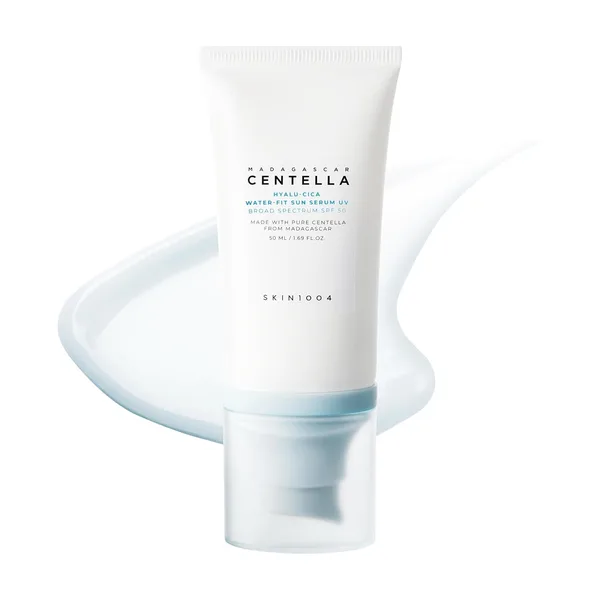
Skin1004 Hyalu-Cica Water-Fit Sun Serum
SPF50+ PA++++ in a watery serum texture. Centella + hyaluronic acid add genuine skincare benefit. No white cast, zero residue, works perfectly under makeup. The daily sunscreen for oily and combination skin.
Where Sunscreen Goes in Your K-Beauty Routine
This trips people up. Sunscreen goes last in your morning routine, after moisturizer, before makeup. The order matters because sunscreen needs to form an unbroken film on the surface of your skin. If you apply it too early and rub other products over it, you break that film and reduce coverage.
How Much to Apply (Most People Get This Wrong)
SPF ratings on the bottle are tested at 2mg per cm2 of skin. For your face and neck, that's roughly a quarter teaspoon or two full finger lengths. Most people apply a third to a half of that, which means they're getting SPF15 out of their SPF50 bottle.
Don't shortchange your SPF application
A thin swipe doesn't cut it. Apply generously, wait 30 seconds for it to set, then go about your routine. If you're outside for more than 2 hours, reapply over makeup with a cushion SPF or a setting spray with SPF.
Does SPF Expire?
Yes, and it degrades faster than you think. UV filters break down over time. Most sunscreens have a 12-month PAO (period after opening) symbol, but heat accelerates that. Don't leave it in your car. Don't keep it in a steamy bathroom cabinet for two summers. Buy a fresh bottle each season. At $15.99 for the Skin1004, there's no reason to push it.
FAQ
Do I need sunscreen if I'm indoors all day?
UVA rays penetrate glass. If you sit near a window, you're getting UVA exposure all day. It's less intense than direct sun, but over years it adds up and causes the same kind of collagen breakdown and dark spot formation. Wearing SPF indoors is worth it.
Can I use Korean sunscreen with actives like retinol or vitamin C?
Yes, and it's even more important to do so. Retinol increases sun sensitivity. Vitamin C is photo-unstable without protection. Any routine using actives needs consistent SPF or you're potentially making things worse, not better.
Why is Korean sunscreen so much cheaper than Western brands?
Part of it is the regulatory framework making production more efficient, part is market competition. Korea has hundreds of SPF products competing in the same space. That competition drives quality up and prices down in a way that the limited US SPF market doesn't.
Is the Skin1004 Sun Serum good for darker skin tones?
Yes. It's a chemical SPF with zero physical (mineral) filters, so there's genuinely no white cast. It works on all skin tones without the greyish tint that mineral sunscreens sometimes leave on deeper skin.
Should I apply sunscreen before or after moisturizer?
After moisturizer, always. Sunscreen is your last skincare step before makeup. The exception is some hybrid formulas marketed as moisturizer-SPF combos, but in general, keeping them separate gives you better coverage from both.
If you've been skipping SPF because it felt wrong on your skin, Korean sunscreen is worth trying. Start with the Skin1004. It's the lowest-friction daily habit you can add to your routine.
Skin1004 Sun Serum $15.99 on Amazon →Related Articles
The 10-Step Korean Skincare Routine Explained
Read →Morning vs. Night Korean Skincare Routine
Read →Korean Skincare for Dark Spots and Hyperpigmentation
Read →