Best Korean Cleansing Oils and Balms for Double Cleansing (2026)
Updated May 8, 2026 · 9 min read
The first thing a Korean skincare routine does better than most Western ones is the cleanse. Not because Koreans have access to some secret formula, but because they take the first step seriously. Double cleansing changed my skin more than any serum I've ever bought. And I spent a lot of money on serums before I figured that out.
Before I started double cleansing, I was washing my face properly, or so I thought. A gentle face wash, lukewarm water, thorough rinse. What I didn't know is that no water-based cleanser removes mineral sunscreen completely. Not the expensive ones, not the drugstore ones. Sunscreen, sebum, and pollution residue are oil-soluble. They require an oil-based first step. Everything I was applying after my single cleanse was sitting on top of a layer of sunscreen residue and oxidized sebum. No wonder my serums felt like they weren't doing anything.
After six months of testing every major cleansing oil and balm in the K-beauty space, here is what I actually use and why.
⚡ Quick Summary: Best K-Beauty First Cleansers
- Best cleansing balm overall: Banila Co Clean It Zero Original ($18) -- the K-beauty cleansing balm that started the category
- Best for sensitive skin: Heimish All Clean Balm ($15) -- fragrance-light, ultra-gentle, works on redness-prone skin
- Best cleansing oil: Kose Softymo Speedy Cleansing Oil ($12) -- fastest emulsification, best sunscreen removal I've tested
- Best luxury balm: I'm From Rice Cleansing Balm ($25) -- brightening, skin-softening, noticeable glow after use
- Best for oily or acne-prone skin: Su:m37 Skin Saver Cleansing Foam (for second step) -- follow any oil cleanser with this
- Key rule: Apply the first cleanser to completely dry skin. Water first = poor emulsification = sunscreen stays on.
Why Double Cleansing Is Non-Negotiable If You Wear Sunscreen
I've heard every objection to double cleansing. "My skin is too dry for oil." "I don't wear heavy makeup so I don't need it." "It's too many steps." I used to say all of these. Here's what changed my mind:
Sunscreen is engineered to stay on your skin through water, sweat, and friction. That is its entire purpose. It uses film-forming polymers and water-resistant ingredients to stay put. A gel cleanser cannot cut through that film. It just washes the top layer of water-soluble debris off the surface of the sunscreen and leaves the film intact. You are essentially washing your sunscreen, not your skin.
The consequences build up. Sunscreen residue traps sebum, dead skin cells, and environmental pollutants against the surface. Pores gradually become more congested. Actives like vitamin C, retinoids, and toners can't penetrate properly because there is a physical barrier between them and your skin. After three months of proper double cleansing, my toner absorbed faster, my serum felt like it was actually working, and my skin had a texture I hadn't seen since my mid-twenties.
Oil vs. Balm: Which First Cleanser Is Right for You?
Both cleansing oils and cleansing balms do the same job. The choice between them is mostly about texture preference and routine logistics:
| Format | Application | Best For | Drawbacks |
|---|---|---|---|
| Cleansing Oil | Pump/pour onto dry skin, massage, add water to emulsify | Speed cleansers, oily skin, summer routines | Can spill in luggage; rinses faster (less massage time) |
| Cleansing Balm | Scoop with spatula, warm on skin, massage, add water | Dry skin, travel, those who like a rich texture | Slightly slower; need to scoop properly to avoid contamination |
| Micellar Water | Saturate cotton pad, wipe over face | Makeup removal assist only | Not an effective sunscreen remover on its own |
My personal switch: I use a balm in winter when I want the richer, more comfortable texture against dry skin, and an oil in summer when I want the fastest possible cleanse in a sweaty, heavy-sunscreen season. Both formats remove sunscreen equally well when you use them correctly.
Banila Co Clean It Zero: The One That Started It All
If you've been in K-beauty for any amount of time, you've heard of the Banila Co Clean It Zero. It is the cleansing balm that essentially introduced Western skincare communities to the concept. It's been in continuous production since 2007 and for good reason: it works.
The Original formula (peach-colored jar) is the most popular, and it's the one I started with. It has a sherbet-like texture that melts instantly on contact with skin warmth, transforms to a light oil during massage, and emulsifies to a milky rinse within seconds of adding water. It removes every sunscreen I've tested it against, including the most stubborn mineral formulas, without any residue or tightness after rinsing. And at $18, it is genuinely one of the best value beauty products I have ever bought.
Banila Co Clean It Zero Original
The cleansing balm that defined a category. Sherbet texture that melts on contact, emulsifies cleanly, removes all sunscreen formats. Comes in Original (all skin types), Purifying (oily/acne-prone), Revitalizing (dull/dry), and Nourishing (mature skin). My default recommendation for anyone new to double cleansing.
Pros
- ✓ Perfect emulsification every time
- ✓ Removes mineral + chemical sunscreen
- ✓ No oily film after rinsing
- ✓ Multiple versions for different skin types
- ✓ Been the benchmark for 15+ years
Cons
- ✕ Contains some fragrance (low level)
- ✕ Jar format requires spatula hygiene
Heimish All Clean Balm: My Go-To for Sensitive Skin Days
On days when my skin is reactive, I switch to the Heimish All Clean Balm. It is a softer, more skin-kind formula than the Banila Co, and while both are effective at sunscreen removal, the Heimish feels more nourishing during the massage phase. It has a faint herbal scent from its natural extract base, but it is far lighter than Western cleansers that load fragrance into every step.
The Heimish has a whipped, mousse-like texture before application that melts beautifully on contact. It rinses completely clean and leaves skin soft without any tightness. At $15, it is actually slightly cheaper than the Banila Co and produces comparable results. If I had to pick just one for a sensitive skin type, this would be it.
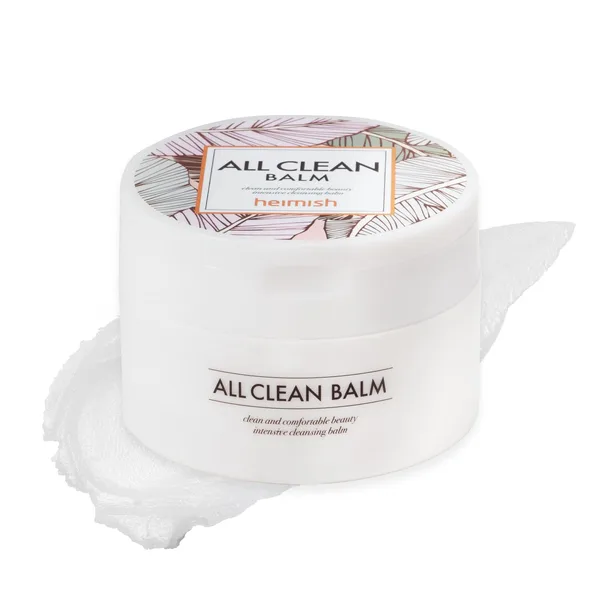
Heimish All Clean Balm
The gentler alternative for reactive and sensitive skin. Whipped texture, complete emulsification, light natural scent. Leaves skin soft without stripping. My recommendation when the Banila Co feels too much for a reactive skin day.
Pros
- ✓ Gentler than most cleansing balms
- ✓ Skin feels soft and comfortable after rinsing
- ✓ Effective sunscreen removal
- ✓ Lower fragrance load than Banila Co
- ✓ Great price for quality
Cons
- ✕ Not fully fragrance-free
- ✕ Jar format (same hygiene notes as above)
Kose Softymo Speedy Cleansing Oil: The Fastest Sunscreen Remover I've Found
The Kose Softymo Speedy Cleansing Oil is technically Japanese, but it is a K-beauty community staple and the cleansing oil I have recommended more than any other. The "Speedy" name is accurate: this emulsifies faster than any other oil cleanser I've used, turning milky white within about five seconds of adding water. For SPF50+ mineral sunscreen, which can be stubborn, the Softymo removes it completely in a single application.
At $12, it is also the most affordable effective oil cleanser on this list. The formula is simple, no fragrance, no irritants, just cleansing esters that do their job efficiently and rinse completely clean. I keep this as my summer staple when I'm wearing sunscreen reapplications throughout the day and want the fastest, cleanest removal possible at the end of the day.
Kose Softymo Speedy Cleansing Oil
The fastest emulsifying cleansing oil I've tested. Removes all sunscreen formats in a single pass, rinses completely clean, fragrance-free. The best-value oil cleanser available and the one I reach for in summer when I need maximum efficiency.
Pros
- ✓ Fastest emulsification I've tested
- ✓ Completely fragrance-free
- ✓ Removes stubborn mineral SPF effectively
- ✓ No oily residue after rinsing
- ✓ Best price-to-performance ratio
Cons
- ✕ Liquid oil format can spill in luggage
- ✕ Basic packaging; no luxe feel
I'm From Rice Cleansing Balm: The Glow Upgrade
The I'm From Rice Cleansing Balm costs more than the others on this list, but it earns it. The rice bran oil base is genuinely nourishing during the massage phase, and after about two weeks of consistent use I noticed my skin had a subtle radiance that I attributed entirely to the cleansing step being upgraded. Rice bran oil is high in vitamin E and ceramide-like compounds that soften and brighten the skin during the cleansing process itself.
This is the balm I use when I'm preparing for an important occasion or when my skin has been looking dull. It is the rare first-step cleanser that genuinely adds something beyond clean skin. At $25 it is the most expensive recommendation here, but a jar lasts three or four months with daily use, which makes the per-use cost quite reasonable.
How to Double Cleanse Properly: The Technique That Actually Matters
The product choice matters, but the technique is what makes double cleansing work or fail. I see the same mistakes repeatedly:
Step-by-Step: Correct Double Cleanse Technique
- Start with completely dry hands and a completely dry face. Water on your skin before the oil prevents proper emulsification and dramatically reduces sunscreen removal. This is the most common mistake.
- Apply the oil or balm generously. For a balm, scoop about a marble-sized amount with the included spatula. For an oil, 2-3 pumps. Warm it between your palms first if it needs it.
- Massage gently for at least 30-60 seconds. This is the actual cleansing step. The massage dissolves oil-soluble debris and lifts it off the skin. Short, perfunctory massage leaves sunscreen behind.
- Add water and emulsify. Wet your hands slightly and massage your face again. The oil should turn white and milky. If it doesn't, keep massaging with a bit more water. The milky emulsion is the indicator that the oil has converted to a water-rinsable form.
- Rinse thoroughly with lukewarm water. Cool to lukewarm, not hot. Hot water dilates blood vessels and strips the barrier. Take 15-20 seconds to rinse completely.
- Follow immediately with your water-based second cleanser. A gentle low-pH gel or foam. This removes any remaining water-soluble debris and preps your skin for actives.
After double cleansing, immediately follow with a hydrating toner. I use the Anua Heartleaf Toner to restore moisture balance right after cleansing, then layer my serum and ampoules while my skin is still slightly damp. The absorption difference compared to cleansing with a single water-based wash is genuinely noticeable.
What to Use as Your Second Cleanser
The second cleanse is where a lot of people over-complicate things. After a proper first cleanse, your skin is already almost completely clean. The second cleanser's job is minimal: pick up whatever the oil missed (mostly water-soluble debris and sweat) and bring your skin to the right pH for actives.
I use the COSRX Low pH Good Morning Gel Cleanser as my second step every evening. It is pH 5.0, which keeps the skin's natural acid mantle intact (unlike most foaming cleansers that strip it). It removes any residual water-soluble debris, rinses completely clean, and leaves my skin feeling genuinely comfortable rather than tight. At $12 for a tube that lasts months, it is one of the best K-beauty basics.
FAQ: Double Cleansing Questions I Get Most Often
What is double cleansing and do I really need it?
Double cleansing uses an oil-based first step to dissolve sunscreen, sebum, and makeup, then a water-based cleanser to remove what's left. You need it if you wear sunscreen daily (which you should). Water-based cleansers alone cannot fully remove modern mineral and chemical sunscreens. Without a first cleanse, you go to bed with a layer of sunscreen residue on your skin, which traps debris and prevents your serums and treatments from penetrating properly.
Can I double cleanse if I have oily or acne-prone skin?
Yes, and oily skin benefits most from double cleansing. The idea that oil-based cleansers cause breakouts is a myth. Non-comedogenic cleansing oils and balms dissolve the sebum plugs and sunscreen residue that cause congestion far more effectively than a single water-based wash. Choose a non-comedogenic formula and emulsify properly: add water and massage until the oil fully turns milky before rinsing.
Do I double cleanse in the morning?
For most people, no. In the morning, your skin has only been against your pillowcase overnight. A gentle water-based cleanser, or even just water if your skin is dry, is sufficient. Save the double cleanse for the evening when you're removing an actual day of sunscreen, pollution, and sebum buildup.
What is the difference between a cleansing oil and a cleansing balm?
A cleansing oil is liquid and applies directly to dry skin, emulsifying on contact with water. A cleansing balm is solid or semi-solid and melts into an oil on contact with skin warmth. Both do the same job equally well. Balms are more travel-friendly (no spills). Oils are faster. My preference: balms in winter for the richer texture, oils in summer for speed.